What you can do now
Ask your MP to step in
The consultation has closed, but the decision hasn't been made. Here's what everyone needs to understand: two court rulings — Finsbury Park in 2017 and Brockwell Park this year — stripped away most of the legal protection our parks used to have. Councils can now rent out our public spaces to big corporations, summer after summer, with impunity — unless we do something to stop them.
The most effective thing you can do is write to your MP. It takes five minutes. MPs can press Tower Hamlets before the decision — expected by 1 September — and only Parliament can put the protection back. Pick a letter below, make it yours, and send it.
Not sure who your MP is? Find your MP by postcode. MPs act for their own constituents — write from your own email, and include your full address with postcode and a phone number. MPs' offices will tell you they cannot take up your case without them — a letter missing these details is a letter wasted.
Please make it yours. Pick one letter below, change what you want, and add a line about what the park means to you. A hundred slightly different letters carry far more weight than a hundred identical ones.
Letter 1 — our only green space
Dear [your MP's name],

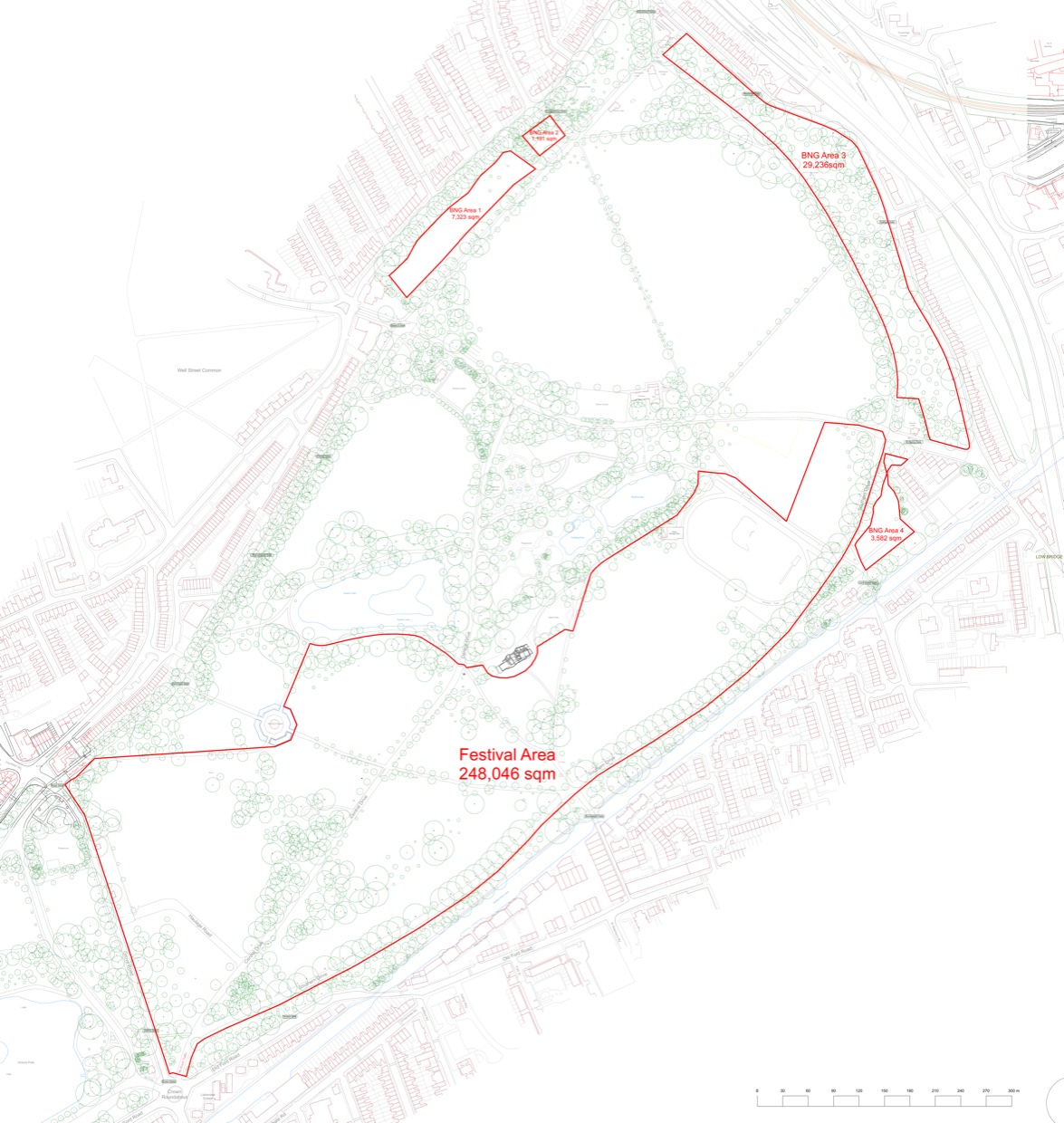
I'm writing about the plan to fence off a third of Victoria Park for festivals — up to 75 days every summer, for the next six years (planning application PA/26/00459/A1).

Victoria Park is the only proper green space many of us have. This is the most densely populated borough in England, and most families round here don't have gardens. AEG already takes over a big part of the park for its 28 days every year — now they want nearly three times that, right through the school summer holidays. The kids with the least space at home are exactly the ones who lose the fields.

The council's consultation closed on 8 July and the decision is due by 1 September. Please speak up for us before then — make representations to Tower Hamlets, and ask ministers why private companies are allowed to shut the public out of public parks, summer after summer.

Yours sincerely,
[your full name]
[your full address, including postcode]
[your phone number]
Letter 2 — the school holidays
Dear [your MP's name],

I'm writing about planning application PA/26/00459/A1 — the plan to fence off a third of Victoria Park for up to 75 days every summer until 2031.

The fencing would sit right across the school summer holidays, every year for six years. Around here most children don't have gardens. The park's fields are where they run about, learn to ride a bike and meet their friends for six weeks every summer — and the families who can't afford to leave London in August are the ones who lose the most.

The consultation closed on 8 July and the council decides by 1 September. Please make representations before then, and ask ministers how it can be right that children's space is rented out in the exact weeks children need it.

Yours sincerely,
[your full name]
[your full address, including postcode]
[your phone number]
Letter 3 — we already put up with 28 days
Dear [your MP's name],

I'm writing about planning application PA/26/00459/A1, AEG's plan for Victoria Park.

Nobody here is anti-festival. AEG already takes over the park's main fields for 28 days every year, and residents live with it — the fencing, the generators, the sound checks, the lorries for weeks either side of every event. We share the park, and we have never asked for the festivals to stop.

But this application nearly trebles it: up to 75 days every summer until 2031, and most of those days aren't concerts — they're a building site. The existing 28 days wouldn't go away either; they'd stay on top. More than 100 days a year of a public park handed to one company isn't sharing. It's a takeover.

The council decides by 1 September. Please make representations to Tower Hamlets before then. The ask is simple: the festivals can carry on as they always have, within the limit everyone else lives by.

Yours sincerely,
[your full name]
[your full address, including postcode]
[your phone number]
Letter 4 — it's simply not right
Dear [your MP's name],

It is simply not right that a private corporation can fence off a third of our park — behind hoarding twice your height — for up to 75 days every summer until 2031. That's what AEG has applied to do to Victoria Park (application PA/26/00459/A1).

This park was created for East Londoners who had nothing else, and that's still what it is. For most of us there's no garden and no other big green space in walking distance. Festivals already happen here 28 days a year and people put up with that. But 75 days, every summer, through every school holiday — that isn't sharing the park, it's taking it.

The decision is due by 1 September. Please make representations to Tower Hamlets before then, and stand up in Parliament for people's right to their own parks.

Yours sincerely,
[your full name]
[your full address, including postcode]
[your phone number]
Letter 5 — why only MPs can fix this (the legal picture, in plain words)
Dear [your MP's name],

I'm writing about planning application PA/26/00459/A1 — AEG's application to enclose about a third of Victoria Park for up to 75 days every summer until 2031 — and about why your help in particular is needed.

Residents have done everything the system asks. In AEG's own consultation, 92% of people objected — 791 to 54 — and hundreds more objections are on the council's register. But the honest picture is that the law no longer gives residents much of a defence:

— In 2017, a court ruling about festivals in Finsbury Park gutted the Open Spaces Act 1906, the law that had protected public parks for over a century.

— This year, the Brockwell Park ruling decided that commercial festivals count as "outdoor recreation" — the very thing parks are supposed to be protected FOR.

— National planning policy, including the current draft NPPF, has no answer to "temporary" events that come back every year, so each summer's takeover is judged as if it were a one-off.

— And after years of cuts, councils need the rent. Tower Hamlets is the park's landowner, AEG's business partner, and the authority deciding this application, all at once.

Legal challenge is beyond most residents' means, and the courts have shown they won't help anyway. That leaves Parliament — which is why I'm writing to you.

Please make representations to Tower Hamlets before the target decision date of 1 September. And please press ministers to make the promised review of green spaces confront this directly: parks held in trust for the public should not be rentable out from under them.

Yours sincerely,
[your full name]
[your full address, including postcode]
[your phone number]